What Is A Disc Prolapse (Herniation)?
A prolapsed (herniated) disc occurs when the outer fibres of the
intervertebral disc (its annulus) are injured, and the soft material
known as the nucleus pulposus, ruptures out of its enclosed space.
The prolapsed or ruptured disc material can enter the spinal
canal, compressing the spinal cord, but more frequently the spinal
nerves.
Herniated discs rarely occur in children, and are most common
in young and middle-aged adults. A herniation may develop suddenly, or gradually over weeks or months.
What Causes A Disc Prolapse (Herniation)?
Intervertebral discs can prolapse suddenly because of excessive
pressure. Examples include:
Falling from a significant height and landing on your buttocks.
This can transmit significant force across the spine. If the
force is strong enough, either a vertebra (bone) can fracture,
or an intervertebral disc can rupture.
Bending forwards places substantial stress on the intervertebral
discs. If you bend and attempt to lift an object which is too
heavy, this force may cause a disc to rupture.
Intervertebral discs can also rupture from a lesser degree of
force - usually due to weakening of annulus fibrosis (outer fibres)
due to repetitive minor injuries which accumulate with time. This
damage may occur with aging, hereditary factors, work- or recreation-related
activities. Often there is no obvious reason why such a process
should have occurred. Then at some point you may lift something,
twist or bend in a manner which exerts enough pressure on the disc
to cause it to rupture through its weakened outer fibres.
Where Do Disc Prolapses Occur?
Intervertebral disc prolapses most commonly occur in the lumbar
spine (lower back) and cervical spine (neck). Less commonly,
they occur in the thoracic spine (mid-back region).
How Does a Disc Prolapse Cause Symptoms?
A prolapsed disc can cause problems in two ways:
Direct pressure . The disc material that has ruptured into
the spinal canal or intervertebral foramen can exert pressure
on the nerves (or spinal cord).
Chemical irritation. The nucleus material contains a number
of substances known as ‘inflammatory mediators’.
These cause chemical irritation of the nerve roots and result
in inflammation of the nerves. Both the pressure on the nerve
root and the chemical irritation can lead to problems with how
the nerve root works.
What Symptoms May Arise From A Disc Prolapse?
The symptoms of a herniated or prolapsed disc may not include back
or neck pain in some individuals, although such pain is common.
The main symptoms of a prolapsed disc include:
Pain running down one or both arms or legs
Pain behind the shoulder blade(s) or in the buttock(s)
Numbness, pins and needles, or tingling in one or both arms
or legs
Weakness involving one or both arms or legs
In severe cases, loss of control of bladder and/or bowels,
numbness in the genital area, and impotence (in men)
The location of these symptoms depends upon which nerve(s) has
been affected. In other words, the precise location of the symptoms
helps determine your diagnosis.
How Is A Precise Diagnosis Made?
Making the diagnosis of a prolapsed disc begins with a complete
history of the problem, and is often completed by a relevant
physical examination. The main questions your neurosurgeon will
be interested in are:
Did you have an injury prior to the pain beginning?
Exactly where is the pain located?
Is there any numbness or pins and needles?
Is there any weakness?
Have you had a similar problem in the past?
Has there been any weight loss, fevers, or other illnesses
recently?
Finally, your neurosurgeon will be interested in knowing if you
have problems walking, or when you have to empty your bladder or
open your bowels. These questions may appear irrelevant, but they
are important to ensure there is no significant pressure from the
herniated disc on the spinal cord or nerves to the bowels and bladder
(for example, ‘cauda equina syndrome’). Such symptoms
may indicate an emergency, and require immediate investigation
and/or surgery.
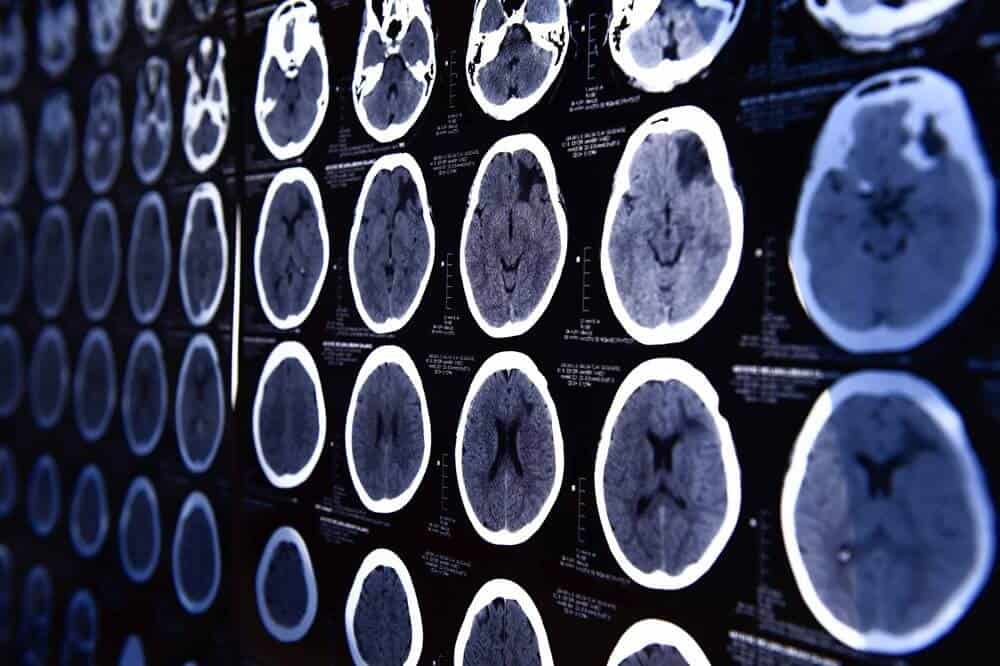
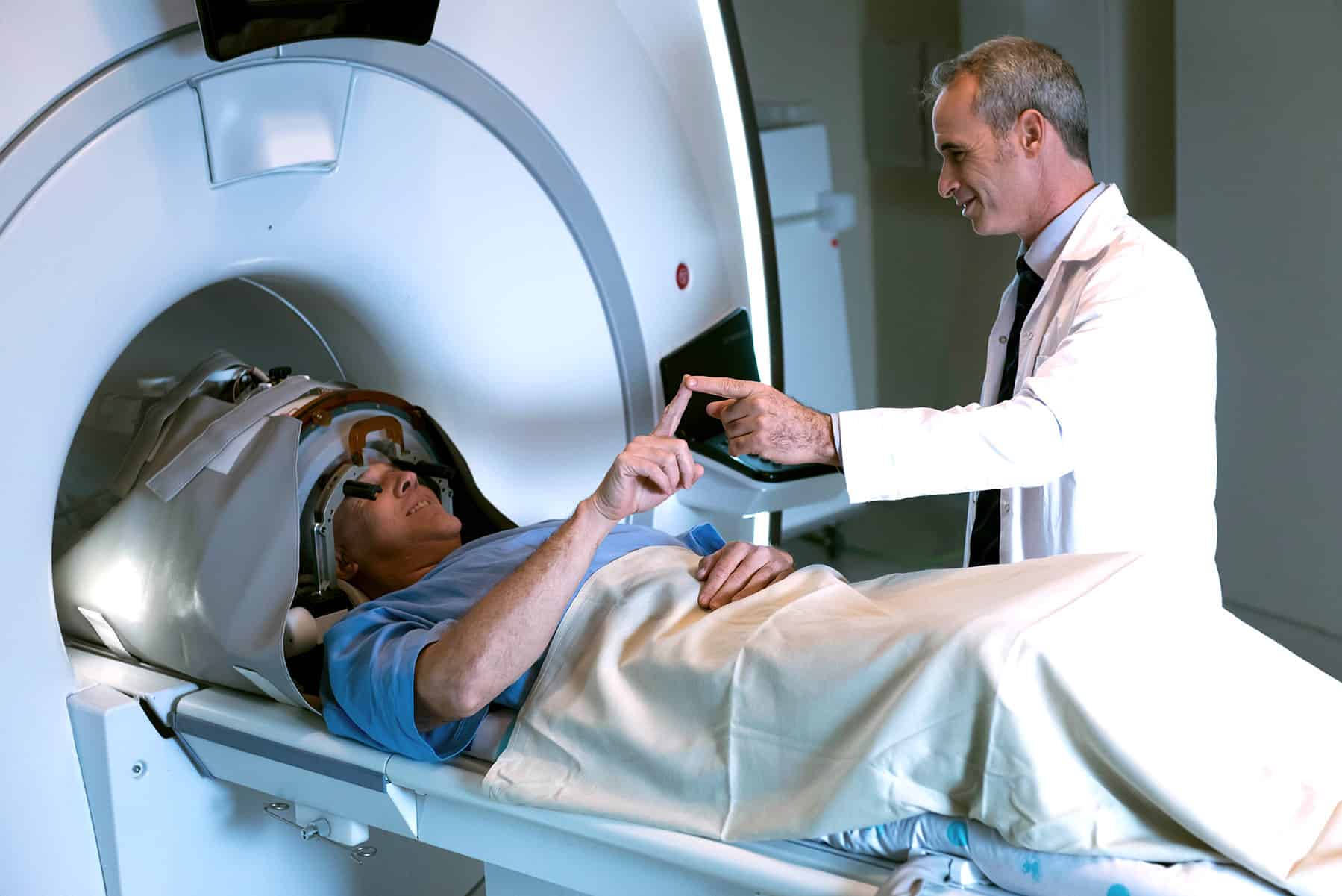
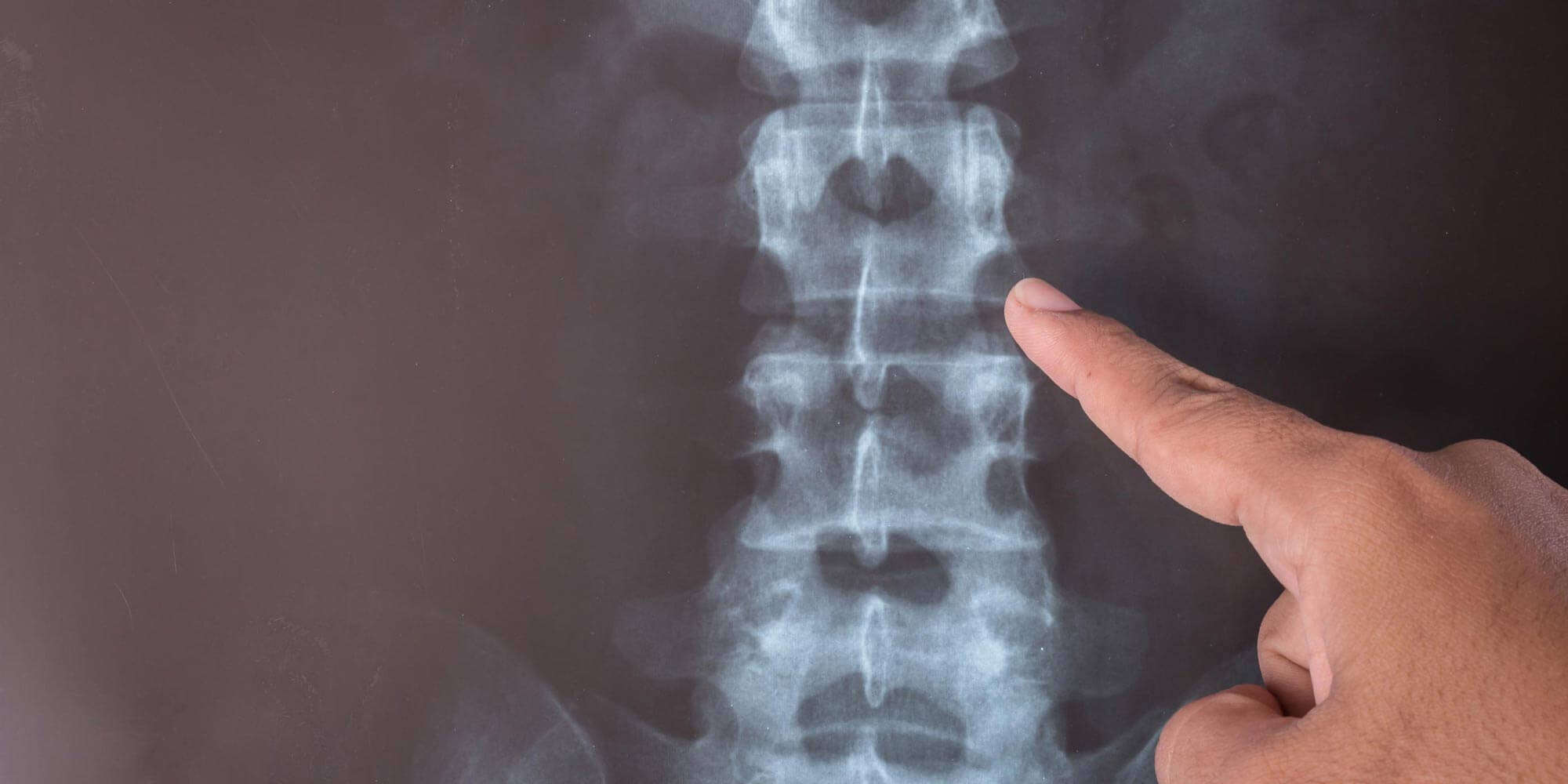
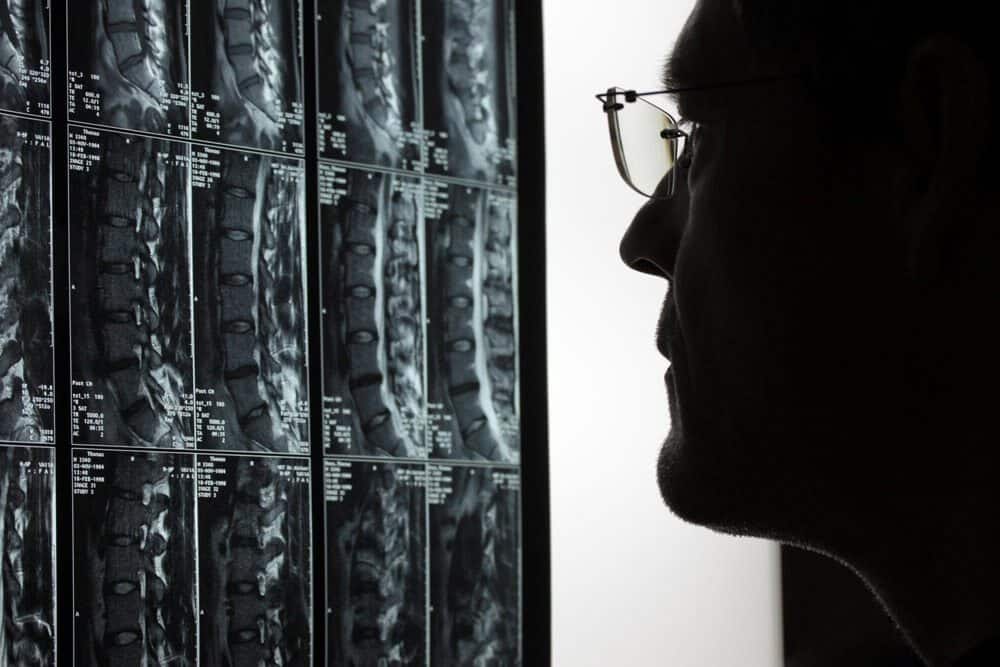
A definite diagnosis is made by radiological investigations. CT
scans will usually reveal significant disc prolapses, however these
are often not the most reliable tests. An MRI scan is the most
accurate test, however small prolapses may be missed, particularly
as most of these investigations are performed whilst recumbent
(lying flat- this places less pressure on the disc and may show
less bulging than when, say, sitting). Other investigations that
you neurosurgeon may organise include a CT myelogram (where dye
is injected into the spinal canal and a CT performed), and a nerve
sheath injection with local anaesthetic (this may confirm exactly
which nerve is generating your symptoms.
How Are Disc Prolapses Treated?
At least 80 or 90% of disc prolapses settle spontaneously and become
relatively asymptomatic. Typically this process takes 6-8 weeks,
but may take longer.
Unless there is evidence of significant spinal cord or nerve root
compression or impaired function, acute disc prolapses are almost
always treated conservatively in the first instance. A combination
of anti-inflammatory and paracetamol-based medications is usually
recommended, together with a program of physiotherapy, and sometimes
hydrotherapy and pilates.
If the symptoms do not settle with reasonable conservative treatment,
intervention may be recommended. This may include a nerve sheath
injection with local anaesthetic (steroids have not been shown
to confer additional benefit), or surgery. Surgery has been shown
to speed recovery following disc prolapse.
The treatment offered to each individual will be tailored to their
clinical presentation, radiological findings, and other circumstances.
Your neurosurgeon will provide you with a treatment program based
on your particular situation, and this will be reviewed periodically.