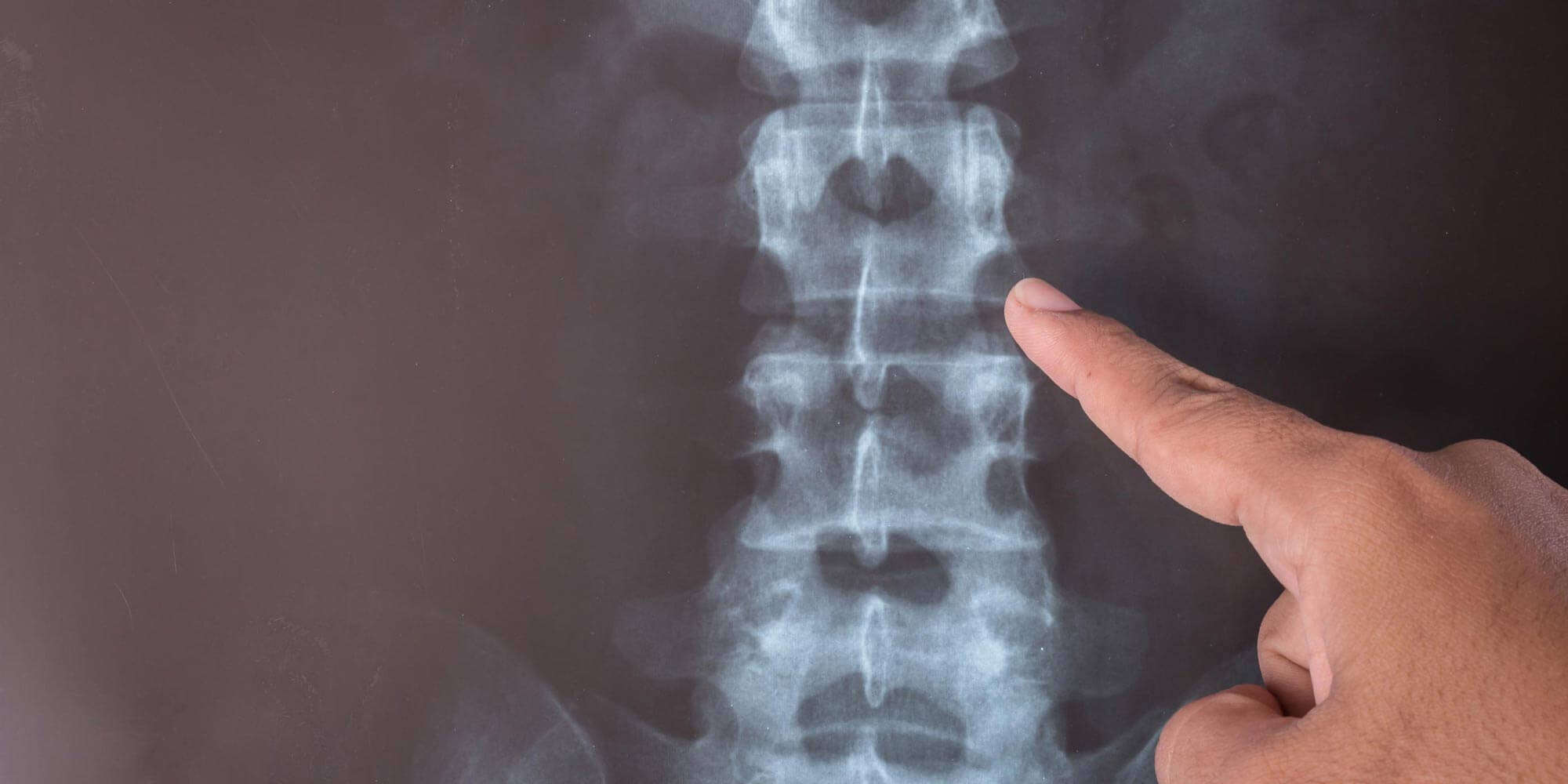
What is spondylolisthesis? "Spondylo"= vertebrae Spondylolisthesis in the lumbar spine is most commonly caused by degenerative spinal disease (degenerative spondylolisthesis), or a defect in one region of a vertebra (isthmic spondylolisthesis). What are the types of spondylolisthesis?
Which types of spondylolisthesis are the most common? In degenerative spondylolisthesis, what usually happens is that ongoing degeneration weakens the facet joints and disc, and (typically) the L4 vertebral body slips forward on the L5 vertebral body. The L4-L5 segment is the one in the lumbar spine with the most movement under normal circumstances, and is therefore most likely to slip when this process occurs. The next most common levels affected by degenerative spondylolisthesis are L3-L4 L5-S1. Isthmic spondylolisthesis occurs most often at L5-S1, and is frequently seen in younger adults than degenerative spondylolisthesis. The cause is a defect in the pars interarticularis (an important bridge of bone) of L5. How is spondylolisthesis graded?
When one vertebra slips entirely off the one below (>100% slip), this is known as spondyloptosis (see picture).
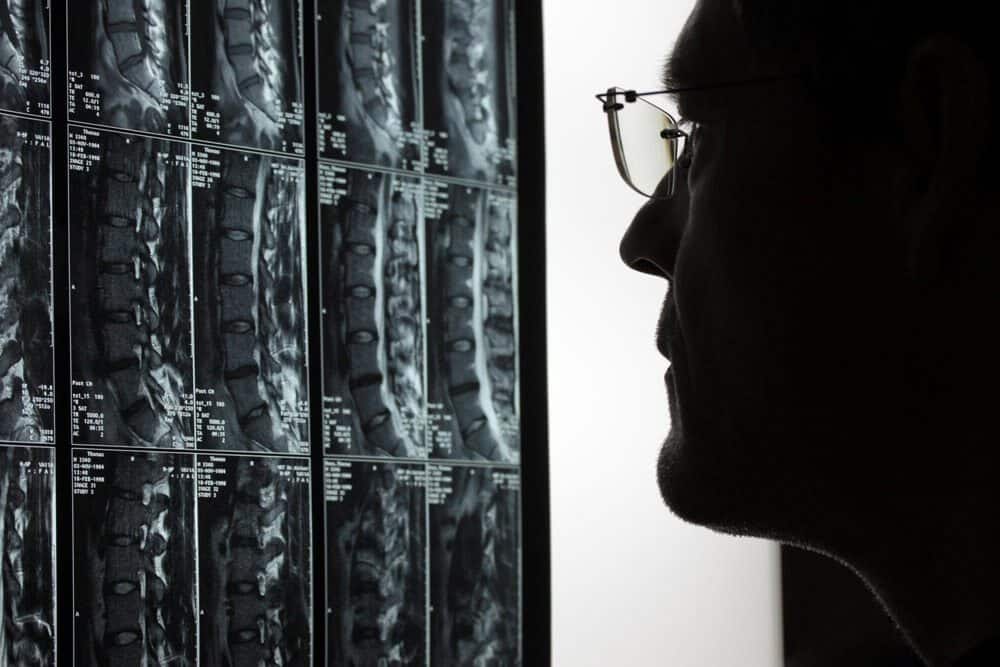
What are the symptoms of spondylolisthesis? Back pain is the most common symptom of spondylolisthesis. This pain is typically worse with activities such as bending and lifting, and often eases when lying down. As the spine attempts to stabilise the unstable segment, the facet joints enlarge (hypertrophy) and place pressure on the nerve root causing lumbar spinal stenosis and lateral recess stenosis. Furthermore, as one bone slips forward on the other, narrowing of the intervertebral foramen may also occur (foraminal stenosis). Severe nerve compression can therefore occur with pain, numbness and weakness in the legs. Sometimes loss of control of the bladder and/or bowels can occur due to pressure on the nerves going to these important structures. How is spondylolisthesis diagnosed? The CT and MRI scans are usually obtained with the patient lying flat, however sometimes a slip may only be obvious when standing or bending forwards. This is why your neurosurgeon will sometimes obtain flexion, extension and standing X-rays, and occasionally a CT myelogram. What are the treatment options for spondylolisthesis? Your specialist may prescribe modification of physical activities, including avoidance of certain recreational and work-related activities, to help settle symptoms from mechanical back pain. Special braces are occasionally prescribed to ease back pain. Strict bed rest is rarely needed, however short periods of bed rest may help with acute painful episodes. A well-rounded physical rehabilitation program assists in settling pain and inflammation, improving mobility and strength, and helping you to do your daily activities more easily. A combination of physiotherapy, hydrotherapy and clinical pilates is usually recommended. Positions, movements, and exercises are prescribed to reduce pain. Hamstring flexibility is addressed, along with strength and coordination exercises for the low back and abdominal muscles (core stability exercises). The aims of these physical therapies are to assist you in:
Some patients also benefit from chiropractic treatment osteopathy, remedial massage, and acupuncture. Review by a clinical psychologist is often useful. Strategies to manage pain may include cognitive behavioural therapy and mindfulness-based programs. It is important to treat any associated depression or anxiety, as these conditions may increase your experience of pain. Medications play an important role in controlling pain, easing muscle spasms, and helping to regain a normal sleep pattern. Long-term medication usage should not be undertaken lightly, and should be closely supervised in order to avoid problems such as tolerance and dependence (addiction). Surgery is needed only if conservative treatments fail to keep your pain at a tolerable level. Surgical treatment for spondylolisthesis must address both the mechanical (instability) and compressive (nerve pressure) issues. Nerve pressure generally requires surgical decompression, also known as a decompressive laminectomy. In order to deal with the compressive issues by taking pressure off the nerves, your surgeon may need to remove some or all of one or both facet joints, as well as portions of the lamina. The facet joints in particular normally provide stability in the lumbar spine. Removal of either or both can cause the spine to become loose and unstable, especially when a degree of slippage has already occurred. A fusion is therefore usually recommended. Similarly, a fusion is necessary to adequately deal with the mechanical issues of instability in spondylolisthesis.
Four types of fusion surgery are commonly recommended for the treatment of spondylolisthesis, depending upon individual patient factors:
|