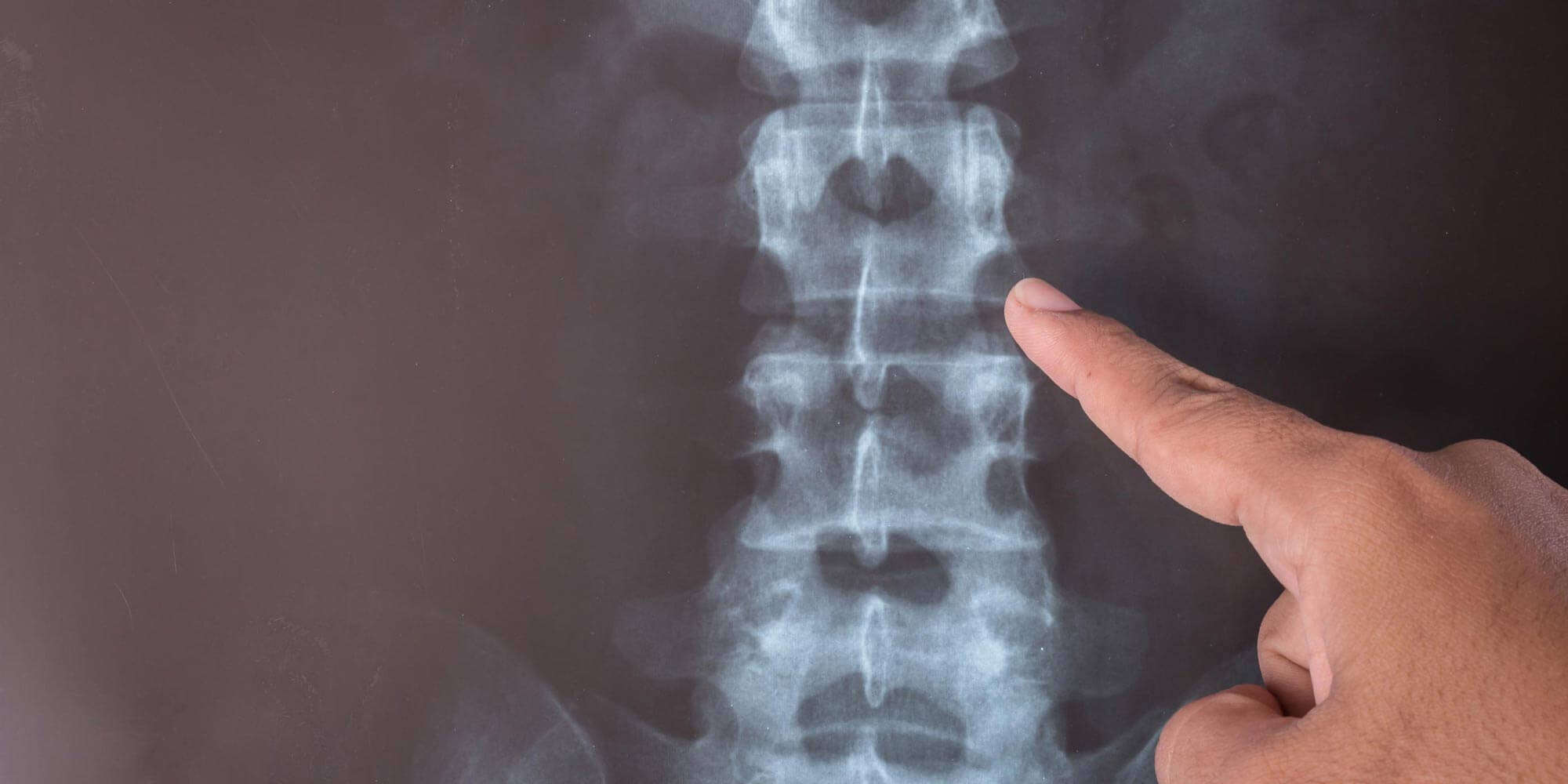
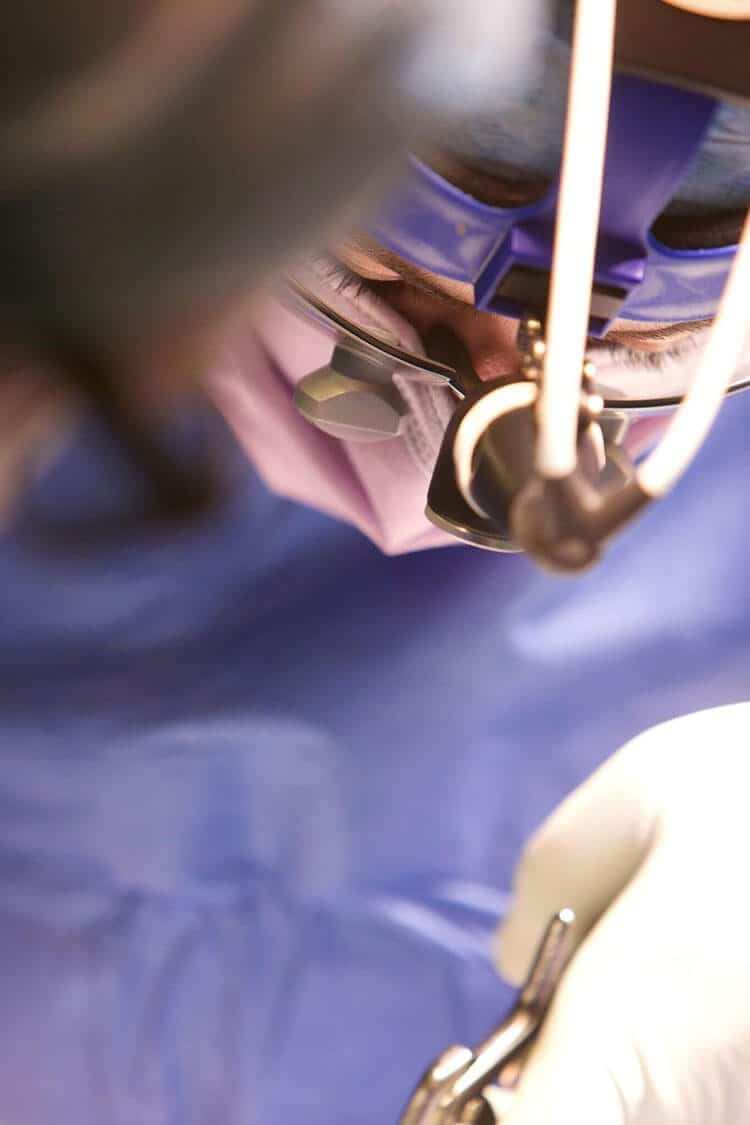
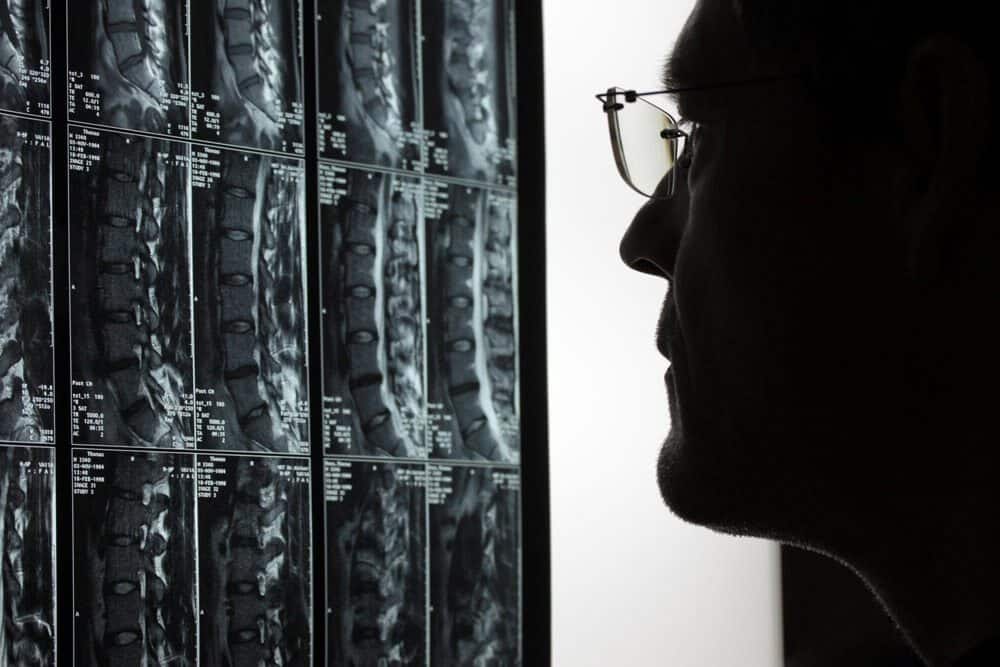
What is a lumbar laminectomy and rhizolysis? The back of the spine has a bony ‘shingle’ on either side of the midline. These angled segments of bone are known as the laminae, and their purpose is to permit muscles to attach to the spine and also to protect the nerve roots. Removal of portions of these laminae is known as a ‘laminectomy’, ‘hemilaminectomy’, or ‘partial hemilaminectomy’. By simply removing portions of the laminae, the underlying nerve roots may remain somewhat compressed. To adequately decompress the nerve root, it is often necessary to remove part of the facet joint (‘mesial facetectomy’), as well as any thickened ligament. Decompression of a nerve root is known in surgical terms as a ‘rhizolysis’. What is an interspinous distractor? Why might I need a lumbar laminectomy and rhizolysis? A lumbar laminectomy (more commonly a partial hemilaminectomy) and rhizolysis is usually performed to treat pressure on one or more spinal nerves in the lower back. Such pressure may be caused by lumbar spondylosis (with lumbar canal, lateral recess or subarticular stenosis), an intervertebral disc prolapse, and/or foraminal stenosis. Surgery is usually recommended when all reasonable conservative measures (pain medications, nerve sheath injections, physical therapy, hydrotherapy, pilates etc.) have failed. In cases of significant instability or neurological problems, surgery may be the appropriate first option. Why might I need an interspinous distractor? In some cases, for example neurogenic claudication in the elderly or unwell, an interspinous distractor may be inserted without decompression, thereby providing a quick, safe, and often very effective alternative to a longer and slightly more risky decompressive procedure. What exactly is wrong with my back? Symptoms of nerve root compression include pain, aching, stiffness, numbness, tingling sensations, and weakness. As spinal nerves branch out to form the peripheral nerves, these symptoms may radiate into other parts of the body. For example, lumbar nerve root compression (pinched nerves in the lower back) can cause symptoms in the buttocks, thighs, calves and feet. What is intervertebral disc degeneration? In degenerative disc disease the discs or cushion pads between your vertebrae shrink, causing wearing of the disc, which may lead to herniation. You may also have osteoarthritic areas in your spine. This degeneration and osteoarthritis can cause back pain. Pain, numbness, tingling and weakness in the legs may result from pressure on the spinal nerves. An annular tear is where the annulus fibrosis is torn, often the first event in the process of disc prolapse. An annular tear can cause back pain with or without leg pain. A lumbar disc prolapse (or herniation) occurs when the nucleus pulposus escapes from its usual position and bulges into the spinal canal, sometimes placing pressure on the nerves or spinal cord. What are osteophytes? What is subarticular or lateral recess stenosis? What are the surgical options? Laminotomy is a less extensive type of spinal surgery, and comprises a partial laminectomy (or partial hemilaminectomy- removal of a portion of one half of the lamina), and removal of part of the facet joint. This is a more targeted approach, and may be utilized when nerve compression is more localised. It can be done to relieve pressure on the nerves or to allow access to a herniated disk or bone spur. Laminotomy has similar surgical goals and risks as a full laminectomy, but is performed through a smaller incision and has a faster recovery time. Spinal fusion permanently joins two or more vertebral bones, and may be especially helpful in cases when one or more vertebrae slip out of their correct position. It can be done alone or at the same time as a laminectomy or laminotomy. To fuse the spine, a carbon or PEEK cage filled with tricalcium phosphate and bone chips is placed in the disc space after the disc has been removed. Screws are inserted into the pedicles of the bones and they are connected with rods. In some cases a fusion is performed without screws or cages (non-instrumented fusion). Fusion will be discussed further in a separate section. An alternative approach is the use of dynamic stabilization devices, such as the X-Stop interspinous distractor. These devices may be used alone (without a decompression) to relieve or reduce the symptoms of neurogenic claudication in lumbar canal stenosis. They may also be used as an adjunct to a laminotomy. The results with surgery to correct spinal stenosis are usually good. Generally, 80% to 90% of patients have relief from their pain after surgery. What are the alternatives to decompressive lumbar surgery?
What are the goals (potential benefits) of surgery? The rationale, aims, and potential benefits of surgery may therefore include:
Generally, the symptom that improves the most reliably after surgery is buttock and leg pain. Back pain may or may not improve (occasionally it can be worse). The next symptom to improve is usually weakness. Your strength may not return completely back to normal, however. Improvement in strength generally occurs over weeks and months. Numbness or pins and needles may or may not improve with surgery, due to the fact that the nerve fibres transmitting sensation are thinner and more vulnerable to pressure (they are more easily permanently damaged than the other nerve fibres). Numbness can take up to 12 months to improve. The chance of obtaining a significant benefit from surgery depends upon a wide variety of factors. Your neurosurgeon will give you an indication of the likelihood of success in your specific case. How does Revision Surgery differ? The risk of complications from lumbar spine revision surgery is significantly higher than in first-time procedures. This is due to a number of factors, particularly scar tissue formation around the nerve roots. It is also more difficult to relieve pain and restore function in revision surgery. It is important be aware that the possibility of experiencing long-term back pain is increased with revision surgery. What are the possible outcomes if treatment is not undertaken?
What are the specific risks of lumbar spine surgery? The specific risks of decompressive lumbar spine surgery and interspinous distractor insertion include (but are not limited to):
What are the risks of anaesthesia and the general risks of surgery?
What are the implications of surgery? You will be in hospital for between 1 and 3 days after your surgery. You will be given instructions about any physical restrictions that will apply following surgery, and these are summarised later in this section. Several X-rays of your back will be taken during surgery to make sure that the correct spinal level is being fused, and also to optimise the positioning of the interspinous distractor (if this is being done). It is critical that you inform us if you are pregnant or think you could possibly be pregnant, as X-rays may be harmful to the unborn child. There is significant variability between patients in terms of the outcome from surgery, as well as the time taken to recover. You will be given instructions about physical restrictions, as well as your return to work and resumption of recreational activities. You should not drive a motor vehicle or operate heavy machinery until instructed to do so by your neurosurgeon. You should not sign or witness legal documents until reviewed by your GP post-operatively, as the anaesthetic can sometimes temporarily muddle your thinking. What do you need to tell the doctor before surgery?
What do I need to do before surgery? If you are fairly overweight, it is advisable that you engage in a sensible weight loss program before you surgery. Please discuss this with your GP and neurosurgeon. In order to prevent unwanted bleeding during or after surgery, it is critical that you stop taking aspirin, and any other antiplatelet (blood-thinning) medications or substances including herbal remedies at least 2 weeks before your surgery. If you normally take warfarin, you will usually be admitted to hospital 3 or 4 days before your surgery. Your warfarin will be ceased at that time (it takes a few days to wear off) and you may be commenced on shorter-acting anti-clotting agents for a few days. These can then be stopped a day or so before surgery. Ideally, you should take a Zinc tablet a day, commencing one month before surgery, and continuing for 3 months after. This should help wound healing. Will I need further investigations? In some patients there is uncertainty either about the diagnosis or exactly which disc or discs in the back are responsible for their symptoms: in those patients, nerve conduction studies and/or a nerve block may shed light on the diagnostic issues. If you have not had an MRI for over 12 months before your surgery, or if your symptoms have changed significantly since your most recent MRI, then this investigation will need to be repeated to make sure that there are no surprises at the time of surgery! Who will perform surgery? Who else will be involved? How is a lumbar decompression performed? Your skin will be cleaned with antiseptic solution and some local anaesthetic will be injected. The skin incision is usually about 2-4cm in the middle of you lower back. It is vertical. The bony structures of your spine are carefully defined, and using microsurgical techniques, a fine high-speed drill is used to shave some bone away over the top of the nerves. The ligament is then detached and removed and the underlying nerve root is identified. The nerve root is decompressed (this is known as a ‘rhizolysis’) and the disc is visualised. If there is a significant disc prolapse, a microdiscectomy is performed; otherwise the disc is left alone. If the disc is to be removed (microdiscectomy), this is done by first cutting the outer annulus fibrosis (fibrous ring around the disc) and removing the nucleus pulposus (the soft inner core of the disc). Disc removal is performed using a combination of special instruments. During the procedure at least one X-ray is performed to check that the operation is being carried out at the correct disc level. At the end of the decompression, a small piece of fat is taken from beneath the skin and placed over the nerve root to minimise scarring. The surgical field is checked for excessive bleeding or any other problems, and a final check is made to ensure that the nerves are no longer under pressure. If an interspinous distractor is being inserted, this is the final step of the operation. It is placed between the midline ‘spinous processes’ at the back of the spine. The wound is closed with dissolving sutures or staples. A wound drain is rarely required. What happens immediately after surgery? Most patients are up and moving around within a few hours of surgery. In fact, this is encouraged in order to keep circulation normal and avoid blood clot formation in the legs. You will be able to drink after 4 hours, and should be able to eat a small amount later in the day. You can be discharged home when you are comfortable. Some patients benefit from a short period of time (usually around a week) in an inpatient rehabilitation facility. What happens after discharge? You will need to take it easy for 6 weeks, but should walk for at least an hour every day. You should avoid sitting for more than 15-20 minutes continuously during this time. During the first 2 weeks after surgery, you should not drive. At 4-6 weeks it is likely that you will be able to return to work on “light duties”. This, and the step-wise progression in your physical activities, will be determined on an individual basis. Bear in mind that the amount of time it takes to return to normal activities is different for every patient. Discomfort should decrease a little each day. Increases in energy and activity are signs that your post-operative recovery is progressing well. Maintaining a positive attitude, a healthy and well-balanced diet, and ensuring plenty of rest are excellent ways to speed up your recovery. Signs of infection such as swelling, redness or discharge from the incision, and fever should be brought to the surgeon’s attention immediately. You will be reviewed after 6-8 weeks by your neurosurgeon. Until then, you should not lift objects weighing more than 2kg, and should not engage in bending or twisting movements. The results of spinal surgery are not as good in patients who smoke or are very overweight. It is therefore important that you give up smoking permanently before your surgery and try to lose as much weight as possible. You should continue wearing your TED stockings for a couple of weeks
after surgery.
What do I need to tell my surgeon about after the operation?
What are there results of surgery? Generally, the symptom that improves the most reliably after surgery is leg pain. Back pain may or may not improve (very occasionally they can be worse). The next symptom to improve is usually weakness. Your strength may not return completely back to normal, however. Improvement in strength generally occurs over weeks and months. Numbness or pins and needles may or may not improve with surgery, due to the fact that the nerve fibres transmitting sensation are thinner and more vulnerable to pressure (they are more easily permanently damaged than the other nerve fibres). Numbness can take up to 12 months to improve. What are the costs of surgery? A quotation for surgery will be issued, however this is an estimate only. The final amount charged may vary with the eventual procedure undertaken, operative findings, technical issues etc. Patients are advised to consult with their Private Health Insurance provider and Medicare to determine the extent of out-of-pocket expenses. Separate accounts will be rendered by the anaesthetist and sometimes the assistant, and hospital bed excess charges may apply. Medical expenses may be tax deductible (you should ask your accountant). You should fully understand the costs involved with surgery before going ahead, and should discuss any queries with your surgeon. What is the consent process? |
|||||||||||||||||||||||||||||||||||||||||||||||||||||